Removable dentures remain an important prosthetic option for dentists managing patients with partial or complete tooth loss. But from a dental practice perspective, their value goes beyond simply replacing missing teeth. The choice of a removable prosthesis can involve treatment planning, denture design, material selection, records, occlusion, laboratory communication, and the patient’s overall clinical needs.
For Florida dentists, a well-organized removable denture workflow can make these cases easier to plan and manage. A clear laboratory prescription, appropriate clinical records, defined design requirements, and communication between the dentist and dental technician can all contribute to a more predictable fabrication process.
I’m Vijay Patel, a dental technician with more than 10 years of experience, and I’ve seen how much difference complete case information and effective dentist-laboratory communication can make during denture fabrication. In this guide, we’ll look at seven practical benefits of removable dentures and the laboratory considerations dentists should understand when incorporating removable prosthetics into their treatment planning.
What Are Removable Dentures?
Removable dentures are prosthetic appliances designed to replace missing teeth and can generally be classified as removable partial dentures or complete dentures.
A removable partial denture replaces some missing teeth while working with the remaining dentition. A complete denture replaces all teeth in an arch. Depending on the case, removable prosthetics may also incorporate different materials, framework designs, attachment systems, or digital laboratory workflows.
From the laboratory perspective, fabrication involves much more than producing the final appliance. Records, impressions or digital information, tooth selection, denture design, base materials, occlusal requirements, and the dentist’s prescription all contribute to the workflow.
That makes communication between the dental practice and laboratory an important part of removable denture treatment planning.
7 Removable Denture Benefits Florida Dentists Should Know
1. Removable Dentures Offer Flexible Treatment Options
One of the primary advantages of removable dentures is their versatility.
Depending on the clinical situation, dentists may consider options such as:
- Removable partial dentures
- Complete dentures
- Acrylic-based removable prosthetics
- Metal-framework partial dentures
- Tooth-supported removable designs
- Certain implant-associated removable prosthetic solutions
This flexibility allows the clinician to consider the patient’s remaining dentition, available support, treatment objectives, and overall treatment plan.
For the dental laboratory, however, flexibility means the prescription needs to be specific.
Information about the intended design, tooth arrangement, materials, aesthetic requirements, framework considerations, and other case-specific details can help the technician understand the clinician’s expectations before fabrication begins.
A detailed prescription does not replace clinical judgment. Instead, it gives the laboratory the information needed to execute the prescribed design accurately.
2. Removable Partial Dentures Can Address Different Patterns of Tooth Loss
When several natural teeth remain, a removable partial denture may be considered as part of the overall treatment plan.
From a clinical perspective, factors such as support, retention, stability, remaining tooth condition, periodontal considerations, hygiene, and occlusion can influence the design.
From the laboratory perspective, those clinical decisions need to be translated into a workable prosthetic design.
This is why communication matters.
A dentist may need to provide information about:
- Remaining teeth and relevant restorations
- Desired framework or clasp design
- Occlusal requirements
- Tooth shade and mould
- Aesthetic expectations
- Special design instructions
- Existing prosthetic references
Research and professional guidance emphasize the importance of appropriate planning and design when providing removable partial dentures, including consideration of support, retention, stability, and hygiene.
For dentists, the practical takeaway is simple: the more clearly the laboratory understands the prescribed design, the less room there is for avoidable ambiguity during fabrication.
3. Complete Dentures Provide an Established Option for Full-Arch Tooth Loss
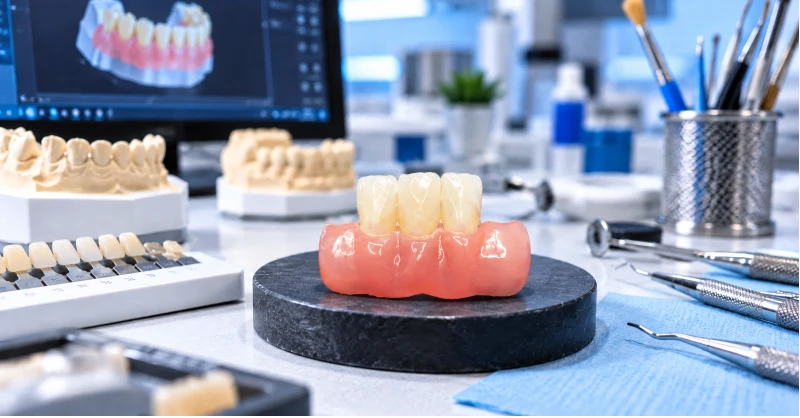
Complete dentures remain a practical removable prosthetic option for patients with complete tooth loss in an arch. As part of the removable denture benefits for dentists, they offer a structured laboratory workflow that can be tailored to each case.
The process may include:
- Impressions or digital records
- Tooth selection and arrangement
- Try-in and processing
- Finishing and quality control
Clear communication about tooth shade, mould, midline, occlusion, aesthetics, and base shade helps the laboratory fabricate the denture according to the dentist’s prescription.
4. Removable Denture Design Can Be Adapted to the Case
Another important benefit is the ability to customize the prosthesis according to the clinical requirements of the case.
Depending on the restoration, customization may involve:
- Tooth arrangement
- Tooth shade and mould
- Base contours
- Framework design
- Retention
- Support
- Stability
- Material selection
- Aesthetic requirements
This does not mean that every removable denture can or should be customized in exactly the same way. The appropriate design depends on the patient’s clinical situation and the dentist’s treatment plan.
For the laboratory, customization begins with understanding what the dentist wants the finished restoration to accomplish.
Photographs, diagnostic information, previous prostheses, detailed prescriptions, and specific design instructions can be useful when a case has particular functional or aesthetic requirements.
5. Material Selection Can Be Considered According to the Case
Material selection is another area where dentist-laboratory communication can be valuable.
Depending on the type of removable prosthesis, laboratory fabrication may involve materials such as:
- Acrylic resins
- Denture teeth
- Metal alloys
- Framework materials
- Other prosthetic materials appropriate to the prescribed design
The appropriate material is not necessarily the same for every case.
Dentists may want to discuss questions such as:
- Is the requested material compatible with the prescribed design?
- Are there particular aesthetic requirements?
- Are repair or adjustment considerations relevant?
- Does the case require a specific framework?
- Are additional records needed before fabrication?
- Can the laboratory support the requested workflow?
A laboratory experienced with removable prosthetics should be able to explain its available material and fabrication options clearly while working within the dentist’s prescribed treatment plan.
6. A Consistent Dentist-Laboratory Workflow Can Improve Case Communication
One of the most practical benefits of working with an experienced dental laboratory is the opportunity to establish a repeatable workflow.
Removable denture problems do not always originate during fabrication. In some cases, difficulties can begin earlier with incomplete prescriptions, insufficient records, unclear design instructions, or missed communication.
A structured workflow can help reduce these avoidable issues.
A dental practice may develop a consistent process for:
- Completing the laboratory prescription
- Providing impressions or digital records
- Sending photographs when appropriate
- Communicating tooth shade and mould
- Identifying special design requirements
- Reviewing try-in information
- Communicating requested changes
- Confirming final processing requirements
This approach can make case communication more predictable for both sides.
For dentists submitting removable dentures regularly, the laboratory relationship should ideally function as an extension of the restorative workflow rather than as a separate production step.
7. Removable Dentures Can Be Incorporated Into Digital Dental Workflows
Digital dentistry is also changing how some dental practices communicate with laboratories.
Traditional impressions and physical records remain relevant for many removable prosthetic cases, but digital scans, CAD-based design, digital records, and computer-assisted laboratory processes may support portions of the workflow when clinically appropriate.
The exact digital workflow depends on the type of denture, the records available, the laboratory’s technology, and the clinical requirements of the case.
For dentists, the important question is not simply:
“Does the laboratory offer digital dentistry?”
A better question is:
“How does the laboratory actually use digital technology in removable denture cases?”
Useful questions to ask include:
- Which digital files can the laboratory accept?
- Which scanner systems or file formats are supported?
- Which stages remain conventional?
- How are design changes communicated?
- Can digital records be retained for future reference?
- How are cases handled when both digital and conventional records are required?
A clearly defined digital workflow can help dental practices understand exactly what information the laboratory needs at each stage.
What Dentists Should Consider When Choosing a Dental Lab for Removable Dentures
Price is only one factor when selecting a laboratory partner.
Dentists may also want to evaluate:
Removable Denture Experience
Does the laboratory routinely fabricate the types of partial and complete dentures your practice submits?
Communication
How easy is it to clarify prescriptions, design requirements, try-in changes, or unusual case requirements?
Material Options
Can the laboratory explain the materials and fabrication options available for the prescribed case?
Quality Control
What checks are performed before the finished removable prosthesis is returned to the dental practice?
Digital Capabilities
If your practice uses digital dentistry, can the laboratory support your preferred digital workflow and file requirements?
Turnaround Expectations
How does the laboratory establish expected turnaround times, and how are complex cases, try-ins, adjustments, or additional records handled?
Case Support
Can the dental team communicate directly with someone who understands removable prosthetic fabrication when a case requires clarification?
These questions can help dentists evaluate whether a laboratory is a good operational fit for their practice.
Common Removable Denture Workflow Problems to Avoid
Even an experienced laboratory cannot compensate for missing or unclear case information.
Before submitting a removable denture case, dentists should consider whether the laboratory has received:
- A complete laboratory prescription
- Appropriate impressions or digital records
- Tooth shade and mould information
- Relevant photographs
- Occlusal records when required
- Specific design instructions
- Information about relevant existing restorations or dentition
- Clear aesthetic or functional expectations
For removable prosthetics, communication should be treated as part of the fabrication workflow—not as an administrative task that happens afterward.
Clear information at the beginning of the case can help the laboratory understand the dentist’s requirements before fabrication starts.
Removable Dentures and Ongoing Case Management
Fabrication is only one part of removable denture treatment.
Dentures may require adjustments, repairs, relines, or replacement as the condition of the prosthesis and oral tissues changes. Supporting tissues and bone can change over time, which can affect denture retention and stability.
The dentist remains responsible for clinical evaluation, diagnosis, treatment planning, and follow-up. The laboratory’s role is to provide the prescribed fabrication, technical support, and communication needed for the case.
For practices that regularly provide removable prosthetics, retaining useful case information—such as previous tooth selections, materials, designs, and fabrication details—may also provide a useful reference for future cases.
Why Laboratory Collaboration Matters for Florida Dental Practices
For dentists throughout Florida, removable prosthetic cases can involve multiple clinical and laboratory decisions.
A laboratory partner should understand that every case arrives with specific requirements. The objective is not simply to manufacture a removable appliance. It is to translate the dentist’s prescription, records, and design requirements into a finished prosthesis according to the requested specifications.
When evaluating a laboratory for removable dentures, Florida dental practices may want to ask:
- Does the laboratory regularly fabricate partial and complete dentures?
- How are case specifications documented?
- What digital workflows are supported?
- How are try-in changes communicated?
- What material options are available?
- How are finished cases inspected?
- Who can the dental team contact when clarification is needed?
These questions can help practices evaluate laboratory compatibility before problems occur.
Removable Dentures: A Laboratory Perspective
Removable dentures continue to have a role in restorative treatment because they provide dentists with multiple prosthetic approaches for different patterns of tooth loss.
For the dental practice, the benefit extends beyond the finished appliance. A well-defined laboratory workflow can support case planning, design communication, material selection, fabrication, quality control, and ongoing case management.
The strongest dentist-laboratory relationships are built around clear expectations and two-way communication—not simply the exchange of a prescription and a finished restoration.
At Palm Beach Dental Lab, our focus is on supporting dental professionals with removable prosthetic laboratory services and clear case communication throughout the fabrication workflow.
Frequently Asked Questions
Removable dentures offer flexible treatment options, customizable designs, multiple material choices, and can support different patterns of tooth loss.
Dentists should provide the prescription, impressions or scans, tooth shade and mould, occlusal records, photographs when needed, and specific design instructions.
Yes. Some removable denture cases can use digital scans, depending on the case, records, and laboratory workflow.
Partial dentures replace some missing teeth, while complete dentures replace all teeth in an arch.
An immediate denture is fabricated before tooth extraction and delivered after the planned teeth are removed.
Ready to Discuss Your Next Removable Denture Case?
Have a removable denture case coming up? Our team can discuss your case requirements, laboratory records, material considerations, design specifications, and workflow before fabrication begins.
Discuss Your Case With Palm Beach Dental Lab
Whether you are submitting a partial denture, complete denture, or a case requiring specific laboratory coordination, our team is available to help your practice understand the laboratory requirements and move the case forward with a clear workflow.