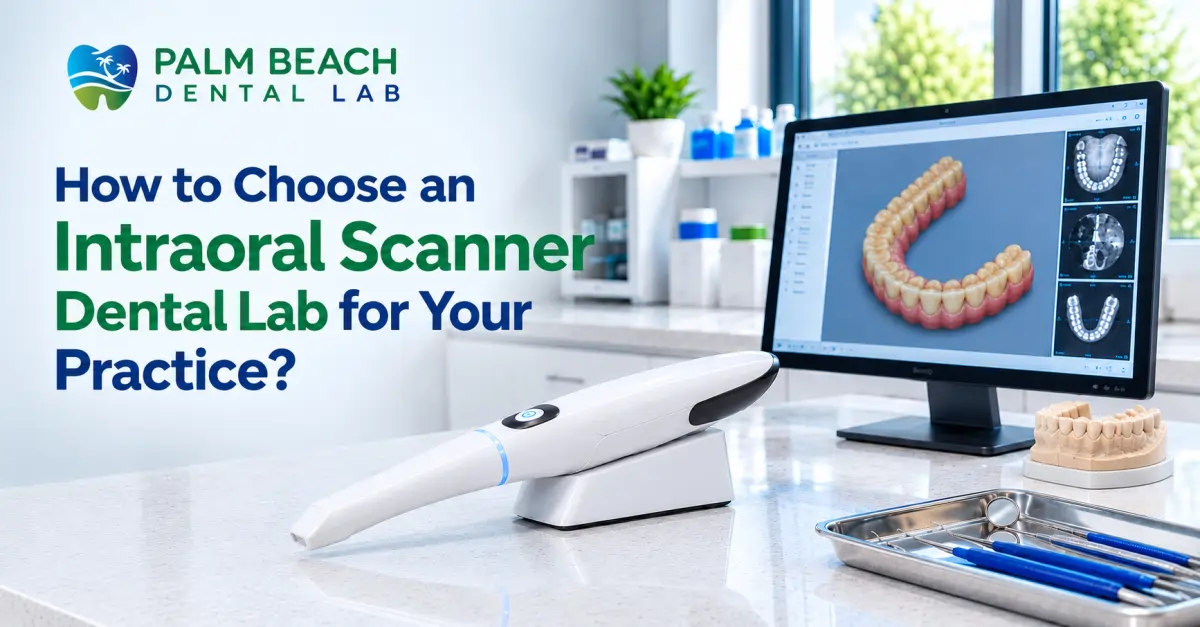
As a dentist, you know that capturing a precise digital impression is only the first step in delivering a successful restoration. Once you send that scan to the laboratory, the quality of the workflow depends on how accurately the lab can interpret your digital information and transform it into a finished restoration.
Your intraoral scanner may capture an excellent digital impression, but that alone does not guarantee a successful restoration. The dental lab you partner with plays an equally important role in interpreting the data, identifying potential concerns, communicating effectively, and transforming your digital file into a predictable final restoration.
So, how do you choose an intraoral scanner dental lab that can truly support your practice? I am Vijay Patel, a dental technician with over 15 years of experience at Palm Beach Dental Lab. I have worked with dentists on a wide range of digital cases, including intraoral scans, restorative work, implant cases, and full-arch restorations. In this guide, I will explain the key factors that make a digital dental lab reliable—from digital file management and restoration quality control to communication, case support, and consistent turnaround times.
Does the Digital Dental Lab Actually Support Your Intraoral Scanner?
The first question to ask is simple: Can the laboratory work reliably with the intraoral scanner you already use?
Different scanner systems and software platforms may have different workflows for exporting and transferring digital impressions. A laboratory that regularly works with your scanner can help reduce unnecessary technical problems.
Check File Compatibility Before Sending Cases
Ask the laboratory which digital file formats and platforms it accepts. Common digital workflows may involve files such as:
- STL files
- PLY files
- OBJ files
- Digital bite registrations
- Scanned preparation files
- Implant scan data
- Digital photographs
The important point is not simply whether the lab says it accepts digital files. Ask whether its technicians have experience working with your specific scanner and digital workflow. A good intraoral scanner digital dental lab should be comfortable receiving digital cases and should have a clear process for reviewing them.
How Experienced Is the Lab With Digital Dentistry?
Digital dentistry requires more than a computer and CAD software. Technicians need to understand how digital impressions translate into actual restorations. They should know how to identify potential problems in scans, margins, occlusion, contacts, and other areas that may affect the final restoration.
Ask how long the laboratory has been working with digital impressions and CAD/CAM dentistry.
Look Beyond “We Accept Digital Scans”
A laboratory may accept digital files but still have limited experience with complex digital workflows.
Consider asking:
- How many digital cases does the lab handle?
- Which intraoral scanners does it commonly receive?
- Does the lab review scans before beginning production?
- How does it handle unclear margins?
- Can technicians communicate with the dentist about scan-related concerns?
- Does the lab have experience with complex implant and full-arch cases?
The answers can help you determine whether the lab is genuinely experienced with digital dentistry or simply accepts digital files.
What Happens When the Digital Scan Has a Problem?
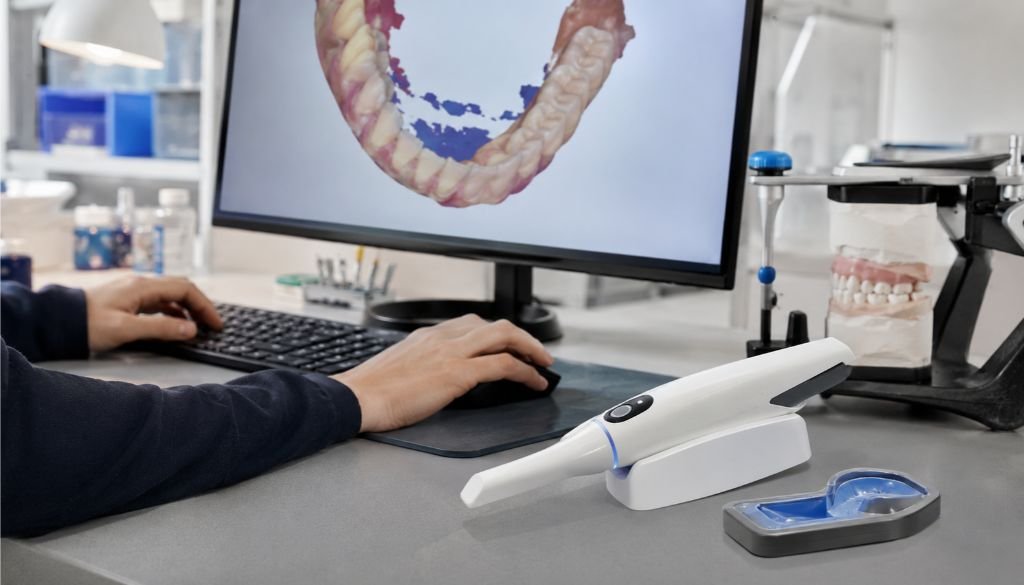
Even high-quality intraoral scans can contain problems. A scan may have missing data, unclear margins, stitching errors, insufficient occlusal information, or areas that require additional scanning.
This is where laboratory communication becomes important. A reliable intraoral scanning lab should not simply begin manufacturing a restoration from questionable information.
For example, if a preparation margin is unclear or the occlusal scan is incomplete, the laboratory should identify the issue before designing the restoration rather than discovering the problem after manufacturing.
Does the Lab Contact You Before Proceeding?
Ask what happens when technicians identify an issue.
Will the lab:
- Contact your office?
- Request a new scan?
- Highlight the problem area?
- Explain what information is missing?
- Provide digital feedback before production?
A proactive laboratory can potentially prevent avoidable remakes by identifying problems before manufacturing begins. For dentists, this can save both clinical and administrative time.
How Well Does the Lab Communicate With Dentists?
Digital technology does not eliminate the need for human communication. In fact, communication may become even more important when handling complex cases.
A technician may notice something during the digital design process that requires clarification. You should know exactly who to contact and how quickly you can expect a response. Look for a laboratory that provides clear communication through appropriate channels such as phone, email, digital platforms, or dedicated case support.
For complex restorative, implant, or full-arch cases, direct communication with experienced technicians can be more valuable.
Can the Lab Handle More Than Routine Digital Cases?
Your current needs may be simple, but your practice may eventually handle more advanced cases. When evaluating an intraoral scanner digital dentistry lab, consider whether the laboratory can support different types of restorations.
Depending on your practice, this may include:
- Crowns
- Bridges
- Veneers
- Implant restorations
- Full-arch restorations
- Digital dentures
- Inlays and onlays
- Complex restorative cases
- Implant-supported prosthetics
A laboratory with broader digital capabilities can potentially become a long-term partner as your practice grows.
What About Complex Implant and Full-Arch Cases?
Complex cases require more than accepting a digital impression.The laboratory may need to work with implant scan bodies, digital implant libraries, bite information, photographs, CBCT data, and other case-specific information.Ask about the laboratory’s experience with these workflows before sending your first complex case.
Lab Should Have a Strong Quality-Control Process
Digital dentistry can improve consistency, but technology does not replace quality control. Ask how the laboratory checks digital designs and finished restorations before they leave the facility.
A quality-control process may include reviewing:
- Marginal fit
- Contacts
- Occlusion
- Anatomy
- Digital design parameters
- Material selection
- Final restoration quality
The exact process will vary between laboratories, but the important question is whether the lab has a defined system for checking its work.
Is the Turnaround Time Compatible With Your Practice?
Turnaround time is another important consideration when choosing an intraoral scanner dental laboratory. Digital impressions can remove some traditional impression-related steps, but that does not automatically mean every laboratory provides fast turnaround. Ask about standard turnaround times for the restorations you commonly order.
You should also ask:
- What is the normal turnaround time?
- Are rush cases available?
- How are urgent cases handled?
- What happens if additional information is required?
- Does shipping time affect the stated turnaround?
Do not choose a laboratory based only on the fastest advertised turnaround. The better question is whether the laboratory can consistently deliver the required quality within a predictable timeframe.
How Does the Lab Handle Remakes and Adjustments?
No dental laboratory is immune to adjustments or remakes.What matters is how the laboratory responds when something does not meet expectations.Before choosing a lab, ask about its remake and adjustment policy.
A professional laboratory should have a clear process for reviewing problems and determining what caused them. This is particularly important with digital cases because issues can originate from several stages of the workflow, including:
- Clinical preparation
- Scanning
- Bite registration
- Prescription information
- Digital design
- Manufacturing
- Finishing
Clear communication can help identify the actual source of the problem rather than simply assigning blame.
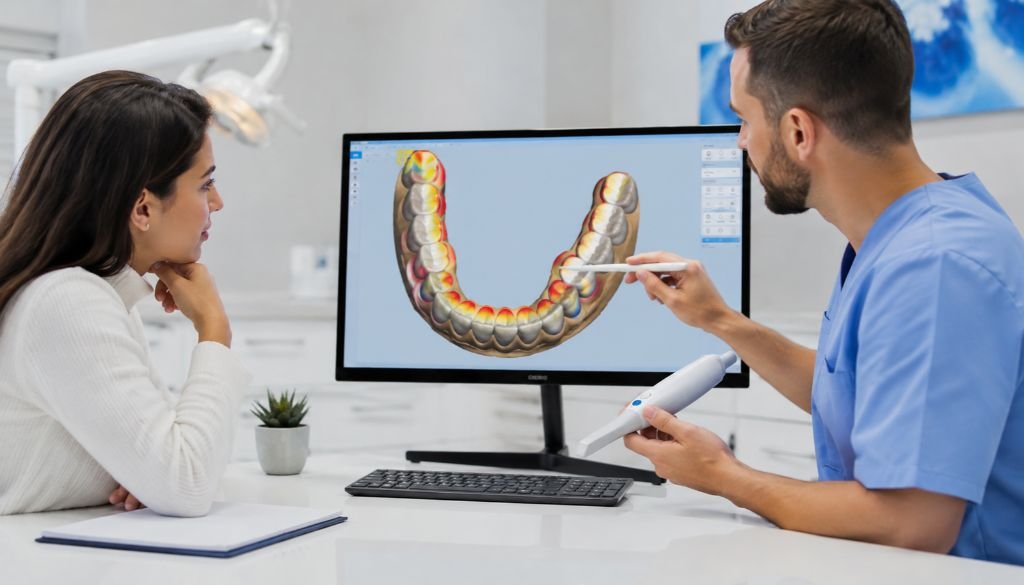
Does the Lab Understand the Clinical Information You Provide?
A digital scan contains valuable information, but it may not tell the entire story. Clinical photographs, shade information, preparation details, opposing dentition, bite information, and specific restoration instructions can all be important depending on the case.
When choosing an intraoral scanning lab, find out how the laboratory uses the information you provide. Does the technician review the complete case or simply download the scan and begin designing?
A laboratory that considers the entire prescription and supporting clinical information is more likely to understand your expectations.
Are You Comparing Cost or Overall Value?
Price matters, but the low cost dental laboratory may not be the most economical option for your practice. When comparing laboratories, consider the total value you receive. For example, a lower laboratory fee may become less attractive if you regularly experience:
- Remakes
- Delayed cases
- Poor communication
- Additional chair time
- Difficult adjustments
- Unclear case status
- Repeated digital submissions
Instead of asking only, “What does this restoration cost?” Consider asking, “What does this laboratory help me save in time, predictability, and workflow?”The right laboratory should provide a balance of quality, communication, reliability, technology, and cost.
What Makes an Intraoral Scanner Digital Dental Lab a Good Long-Term Partner?
The best laboratory relationship is not simply about sending a scan and receiving a restoration. It is about creating a predictable digital workflow between your dental practice and laboratory.
A strong intraoral scanner dental laboratory should combine digital technology with experienced technicians, clear communication, quality control, dependable turnaround times, and an understanding of your clinical expectations.
As your practice adopts more digital workflows, your laboratory should be able to grow with you. The right partner should be prepared to support routine restorative cases as well as more complex digital implant and full-arch workflows.
Looking for an Experienced Digital Dental Lab Partner?
If your practice is looking for a dental laboratory that can support digital workflows beyond simply receiving intraoral scans, Palm Beach Dental Lab can be a valuable partner for dentists. As a Florida-based digital dental laboratory, the lab works with dentists on precision-crafted crowns, bridges, implant restorations, and full-arch restorations, helping practices manage both routine and more complex restorative needs.
With 10+ years of experience and 1,000+ installations and cases supported, Palm Beach Dental Lab provides reliable dental laboratory solutions for dentists. Our services include multilayered zirconia, custom abutments, All-on-X full arches, All-on-X PMMA, flipper partials, immediate dentures and partials, flexible Nesbits, full dentures and night guards. Each service is designed to support accurate restorations, consistent quality, and a smoother workflow for your practice.
To make digital case submission easier, Palm Beach Dental Lab accepts digital impressions from iTero, DEXIS, CS Connect, Dentsply Sirona, Medit Link, TRIOS by 3Shape, Shining 3D, and STL files, helping dentists connect their preferred scanning system with our laboratory workflow.
The lab is committed to helping dentists maintain dependable communication, accurate case coordination, and a more consistent workflow throughout the restoration process. For more information or to discuss your case requirements, contact Palm Beach Dental Lab at +1 (561) 603-0353 or contact@palmbeachdentallab.com.
Conclusion
Choosing an intraoral scanner dental lab should ultimately be about more than technology compatibility. Your scanner creates the digital impression, but the laboratory determines how effectively that information is interpreted, designed, manufactured, and transformed into a finished restoration. A laboratory that understands your clinical expectations and fits naturally into your workflow can make digital dentistry more predictable and easier to manage.
Before committing to a laboratory, evaluate the complete relationship rather than one feature or price point. Consider how confidently the lab can support your present workflow, how well it can adapt as your practice takes on more advanced cases, and whether its team can become a reliable extension of your clinical process. The right digital dental lab should not simply process your files—it should help you build a more efficient, consistent, and scalable approach to restorative dentistry.
Have a digital case you’d like to discuss? Contact Palm Beach Dental Lab to review your scanner workflow, case requirements, or restoration needs with the laboratory team.